

About ISE'26
The Fifth Brazilian Workshop on Intelligent Software Engineering (ISE'26) will be held in person. ISE'26 is co-located with the 17th Brazilian Conference on Software (CBSoft 2026).
Aims and Scope
In modern society, software is ubiquitous, being present in almost every aspect of life. However, developing software is costly. Therefore, there is a continuous effort for innovative designs for helping make software more reliable, maintainable, and reduce its development cost. Further, there is an increase in AI-enabled software, bringing new software engineering challenges.
In recent years, Intelligent Software Engineering (ISE) has emerged as a promising means to address these challenges. ISE is ambidextrous, including solutions based on (i) applying Intelligent Techniques to Software Engineering problems and (ii) applying Software Engineering to developing Intelligent Systems.
An Intelligent Technique is defined as a technique that explores data (from digital artifacts or domain experts) for knowledge discovery, reasoning, learning, planning, natural language processing, perception, or supporting decision-making. Examples of Intelligent Techniques are search and optimization (e.g., Genetic Algorithm), Machine Learning, Deep Learning, Data Mining, Recommender Systems, Reasoning Under Uncertainty (e.g., Bayesian Networks), Software Analytics, and Decision Analysis. An intelligent system is a system that applies an Intelligent Technique for a given domain, such as a bug prediction, code recommendation, code quality analysis, code refactoring, software testing automation, team formation, requirements analysis, software project management, risk management and continuous integration and deployment.
The goal of ISE'26 is to strengthen the Intelligent Software Engineering community by integrating researchers and professionals from different areas (Software Engineering, Artificial Intelligence, Analytics, etc) to discuss and advance the state of the art and practice of ISE, its use, and application in the industry.
Topics that are within the scope of this workshop include (but are not limited to):
- Foundation Models for Software Engineering
- Large Language Models for Software Engineering
- Artificial Intelligence for Software Engineering (AI4SE)
- Machine Learning for Software Engineering (ML4SE)
- Software Engineering for Artificial Intelligence (SE2AI)
- Big Code
- Software Analytics
- Search-Based Software Engineering
- Data Mining for Software Engineering
- Recommender Systems for Software Engineering
- Reasoning Under Uncertainty for Software Engineering
- Natural Language Processing for Software Engineering
- Multiple Decision Criteria Analysis for Software Engineering
- Soft Computing for Software Engineering
- Expert Systems for Software Engineering
- Knowledge-Based Systems for Software Engineering
- Semantic Network for Software Engineering
- Data Science for Software Engineering
- Sentiment Analysis for Software Engineering
- Ontology for Software Engineering
- Requirements Engineering for Intelligent Systems
- Testing and QA for Intelligent Systems
- Design Patterns for Intelligent Systems
- Architecture for Intelligent Systems
- Software Engineering principles for building or maintaining Intelligent Systems
- DevOps for Intelligent Systems such as Machine Learning-enabled Systems (MLOps)
Submission Guidelines
Paper Format
ISE accepts papers in two formats.
Technical Papers (6 pages)
- ISE accepts papers within the context of "Intelligent Software Engineering". Positive and negative results are welcome, though negative results should still be based on rigorous research and provide details on lessons learned.
Industry papers / Emerging Results (2-4 pages)
- Results, challenges, lessons learned from industrial applications of "Intelligent Software Engineering".
- New and inspiring ideas, as well as ongoing research with preliminary and interesting results on applications of "Intelligent Software Engineering".
Instructions for Authors
Papers can be submitted in Portuguese or English. Submission in English is strongly encouraged. All submissions must be in Adobe Portable Document Format (PDF) and must comply with the ACM 2-column SBES format available at this overleaf project link or latex files (.zip) download. LaTeX users must use the acmart.cls class provided in the template with the conference format enabled at the document preamble: \documentclass[sigconf]{acmart}
Authors must use the ACM-Reference-Format.bst bibliography style also provided in the template: \bibliographystyle{ACM-Reference-Format}
Submissions must be no longer than the limits defined in the Paper Format section, including all figures and references.
Papers should be electronically submitted through JEMS. Submissions that do not comply with the required submission format, are out of the scope of the symposium or were submitted or published in any other forum (conference or journal) will be rejected without review. At least two Program Committee members will review all other papers.
Open Science Policy
ISE'26 supports the principles of Open Science, aiming to increase transparency, reproducibility, and collaboration in research. Authors are encouraged to share data, code, and other research artifacts in an anonymized and curated format to help reviewers and readers validate results and reuse materials. We understand that in some contexts—such as qualitative or industrial studies—sharing data may not be possible due to privacy, confidentiality, or other restrictions.
Policy on the Use of Generative AI Tools
Authors submitting to ISE'26 must follow ethical guidelines regarding the use of AI tools in research writing. It is not allowed to:
- List AI tools (e.g., ChatGPT) as co-authors;
- Submit sections written entirely by generative AI.
It is allowed, with proper acknowledgment in the paper, to:
- Use AI tools to help generate or revise parts of the content. The acknowledgments section should clearly state what was produced and which tool was used.
Example: "ChatGPT was used to revise Section 2 and generate the initial version of Table 1."
It is also acceptable (without the need to mention it) to:
- Use AI tools to enhance clarity, grammar, or image quality—similar to using grammar-checking or image-editing software.
At the time of submission, authors will be required to disclose whether AI tools were used during the preparation of the manuscript. This information is requested strictly for ethical transparency, and authors should not feel discouraged from using such tools when appropriate.
Double-Blind Submission
ISE'26 will follow a double-blind review process. All submitted papers should conceal the identity of the authors. Both author names and affiliations must be omitted. In addition, the following rules should be addressed:
- Citations to own related work must be written in the third person. For example, one must write "the previous work of Silva et al." as opposed to "our previous work." As a heuristic, occurrences of "we", "our", "ours", "github", "funding", etc. should be looked in the paper and removed before submitting.
- In the submitted paper, any artifact in a repository or website that allows identifying the authorship should not be mentioned. If any artifact needs to be made available, it should be anonymized in the repository/website.
- Reviewers will not be encouraged to look for references that identify the authors in other sources on the Internet. Searches in digital libraries or existing artifacts do not break the double-blind policy.
- If the submitted paper is a follow-up of a previous work, the reference may be anonymized in the submitted paper. For example, "the previous work of Silva et al." can be adapted to "based on the previous work [X]" and the reference at the end of the paper can be presented as "[X] Anonymous authors. Not presented due to double-blind review.".
After the paper's acceptance, all the paper information (without anonymization) can be included in the camera-ready version.
Any questions about the preparation of the paper following the double-blind rules can be sent to the Program Committee Chairs.
Organization, Chairs and Important Dates
Organization:
ISE is a workshop organized and promoted by UFCG, UEG, and supported by VIRTUS/UFCG.
ISE Steering Committee:
Program Committee Chairs:
- Danyllo Albuquerque (IFPB)
- Emanuel Dantas Filho (IFPE)
- Ademar França de Sousa Neto (UFERSA)
- Roberto Felício Oliveira (UEG)
Important Dates:
Definitive
- Paper Submission: July 10, 2026
- Paper Update Deadline: July 12, 2026
- Notification of Acceptance: August 03, 2026
- Camera-Ready: August 10, 2026
- CBSoft registration: August 24, 2026
- Workshop Date: September 11, 2026
Keynote
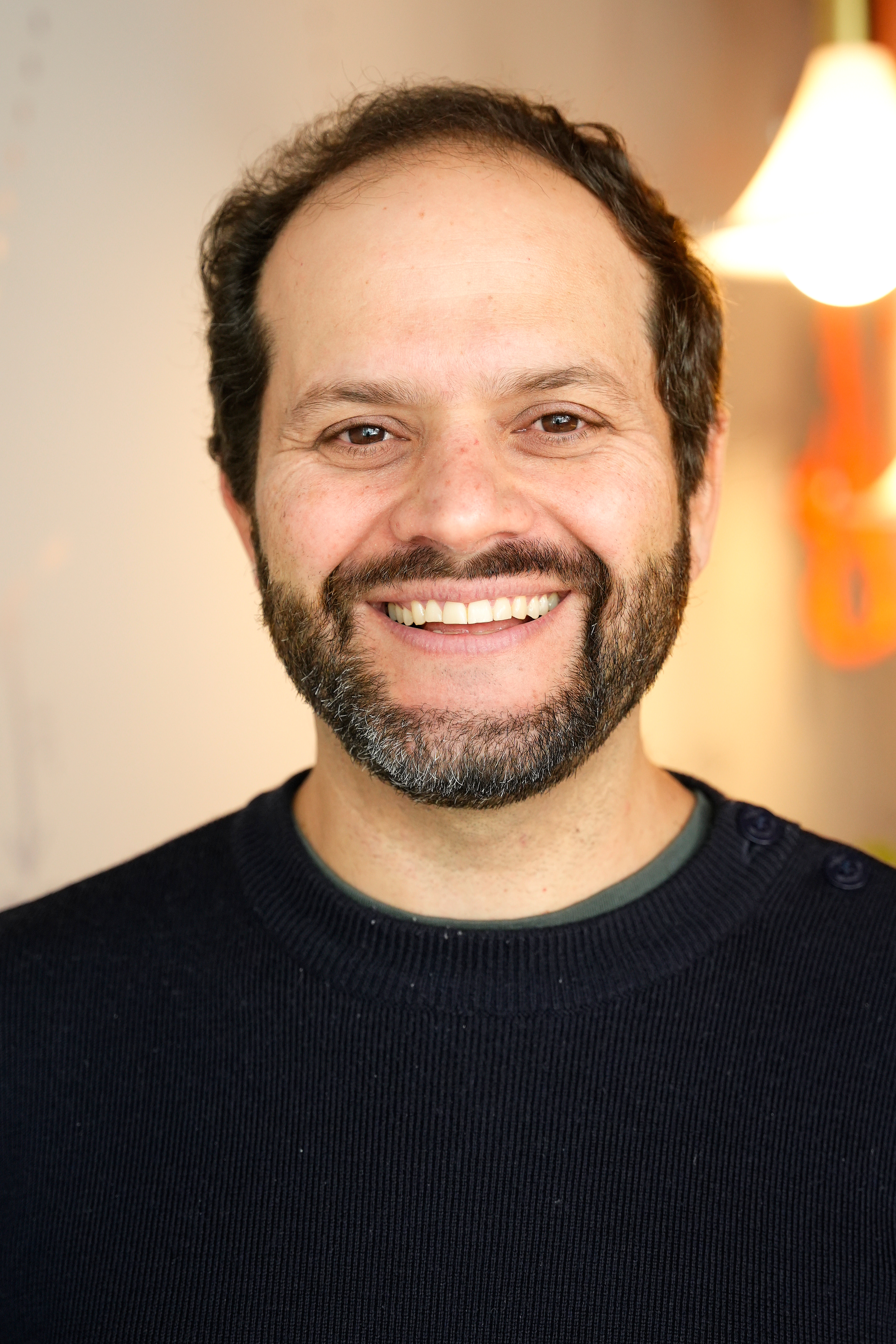
André Araújo
Senior Staff Research Scientist / Tech Lead Manager at Google DeepMind
Title: What’s missing in multimodal AI? Towards spatial awareness, effective tool use and fine-grained understanding
Description: The recent progress in multimodal AI systems has enabled a variety of applications, such as natural chatbot interactions, smooth information-seeking journeys and promising robotics deployments. Despite the significant advancements in the past few years, these systems still face challenges in a number of areas. In this talk, I will highlight recent work from my team and collaborators to enhance three important aspects: spatial awareness, effective tool use and fine-grained understanding. Taken together, these ideas offer directions for designing ever-more-capable multimodal systems and experiences.
Short Bio: André Araujo is a Senior Staff Research Scientist / Tech Lead Manager at Google DeepMind, based in the Sao Paulo (Brazil) office. His current work focuses on multimodal AI (computer vision, machine learning and related areas). André leads a team of researchers distributed between Mountain View (US), Sao Paulo (Brazil) and Zurich (Switzerland). He graduated with a Ph.D. from Stanford University in 2016 and is a Senior Member of the IEEE.
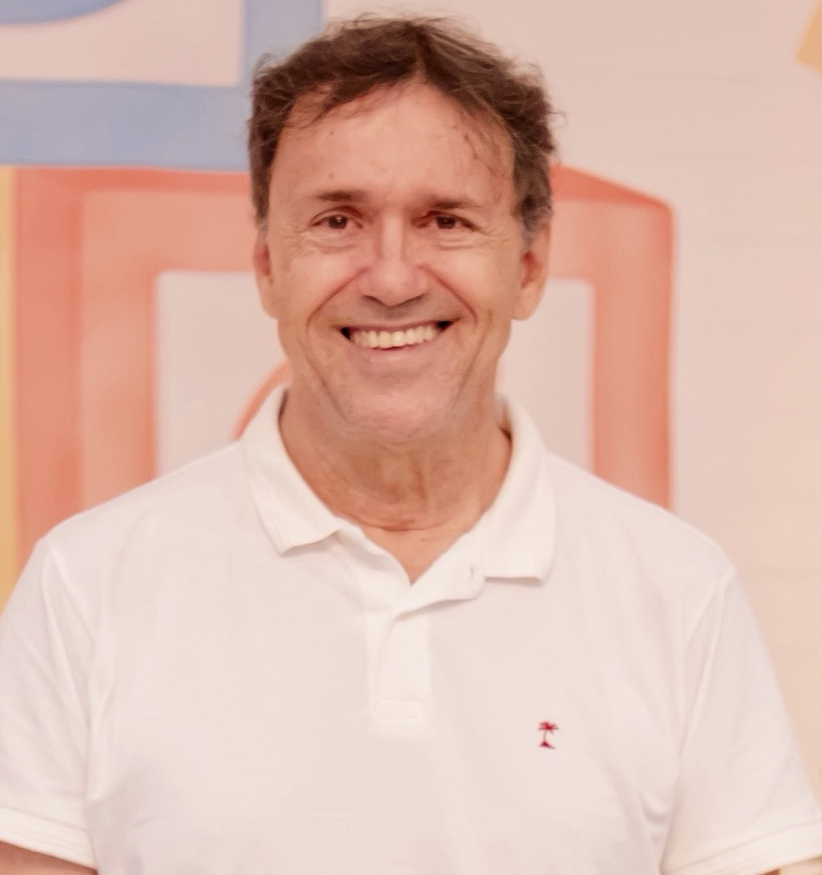
Evandro Costa
Full Professor at UFAL
Title: Intelligent Agents in Software Engineering: From Classical Rationality to LLM-based Agents and Neuro-Symbolic Integration
Description: This keynote offers a structured perspective on the evolving relationship between intelligent agent research and Software Engineering, spanning classical AI foundations, LLM-based agents, and the current frontier of Neuro-Symbolic Architectures. Beginning with the rational agent model and its implications for software system design, the talk examines Agent-Oriented Software Engineering as an early attempt to make agent abstractions first-class citizens of the SE process. It then addresses Multi-Agent Systems, their coordination mechanisms, and frameworks such as JADE and SPADE. The second half of the talk focuses on the paradigm shift introduced by LLM-based agents, analyzing the ReAct pattern and its continuity with classical BDI architectures, before turning to Neuro-Symbolic Architectures as a response to the verification and reliability challenges that purely neural agents cannot address. The keynote concludes with Neuro-Symbolic Architectures as a promising convergence point, and an assessment of what Software Engineering research must still deliver.
Short Bio: Evandro de Barros Costa is a Full Professor in the Computing Institute at Federal University of Alagoas (UFAL), Brazil. He received a B.S. degree in Computer Science from Federal University of Paraiba (UFPB), Brazil in 1988, an M.Sc. and a Ph.D degree in Electrical Engineering from UFPB in 1989 and 1997. His research interests include Generative Artificial Intelligence, agent and multi-systems, knowledge representation and reasoning, explainability in AI, machine learning, and data science. He has published more than 200 papers in international conferences and journals. He has been on the technical program committee of many conferences, such as IJCAI, AAMAS, UAI, AIED, ECAI, and has been reviewer on some international journals, such as Information Science, IEEE Transactions on Education, IEEE Transactions on Learning Technologies. Over the years, he has worked extensively on designing and developing AI for education and for fashion domain.
Awards
Distinguished Paper
The ISE/CBSoft Steering Committee will appoint a committee to award the best papers of ISE Technical Papers. Awarded papers will be announced during the ISE/CBSoft. The best papers will be invited to submit an extended version to the Journal of Software Engineering Research and Development (JSERD).
Outstanding Reviewer
The ISE/CBSoft Steering Committee values the important role played by Program Committee members in ensuring the quality of the event. As a way to recognize their commitment, the organizing committee will present an Outstanding Reviewer certificate to individuals who demonstrate excellence in reviewing, through timely feedback, constructive and well-structured evaluations, and active engagement in committee discussions.
ISE Program Committee
- Adriano Santos - Ro-Main (Canada)
- Aline Brito - UFOP
- Anderson Cavalcante Gonçalves - UEG
- Alexandre Adler Cunha de Freitas - UFES
- Alexandre Costa - IFPB
- Allysson Allex Araújo - UFCA
- Álvaro Sobrinho - UFAPE
- Ana Clara Araújo Gomes da Silva - UEG
- Andres Diaz-Pace - ISISTAN/UNICEN (Argentina)
- Andressa Bezerra Ferreira - IFCE
- Ayla Débora Dantas de Souza Rebouças - UFPB
- Breno França - UNICAMP
- Bruno Neiva - IFPB
- Camilo Camilo Almendra - UFC
- Carlos Solon Soares Guimarães Júnior - ISI-SIM
- Chrystinne Fernandes - MIT (USA)
- Claudio Micelo de Farias - UFRJ
- Cleyton Caetano Souza - IFPB
- Dalgoberto Miquilino Júnior - UFAL
- Daniel Enos Macedo - IFPB
- Daniela Cascini - CEFETMG
- Danilo Freire - UFCG
- Eduardo Santiago Moura - NUTES/UEPB
- Ednaldo Dilorenzo - IFPB
- Elmano Ramalho Cavalcanti - IFPB
- Emilia Mendes - Blekinge Institute of Technology (Sweden)
- Felipe Fernandes - Nursing School of the University of Coimbra (Portugal)
- Evandro Costa - UFAL
- Everton Tavares Guimarães - Penn State University (USA)
- Felipe Pontes - EDGE/UFAL
- Felipe Ramos - IFPB
- Guilherme Horta Travassos - UFRJ
- Guillermo Rodriguez - ISISTAN/UNICEN (Argentina)
- Gutemberg Gonçalves dos Santos Júnior - UFCG
- Heitor Augustus Xavier Costa - UFLA
- Hernán Astudillo - UNAB (Chile)
- Igor Barbosa - IFPB
- Igor Muzetti Pereira - UFOP
- Isabelle Maria de Lima de Maria Souza - UFSB and VIRTUS/UFCG
- João Francisco Valiati - ISI-SIM
- Joaquim José Cintra Maia Honório - VIRTUS/UFCG
- Jesaias Carvalho Pereira Silva - UFERSA
- Kecia Ferreira - CEFETMG
- Kyller Gorgônio - UFCG
- Leandro Minku - University of Birmingham (United Kingdom)
- Lenardo Silva - UFERSA
- Lincoln Rocha - UFC
- Maxwell Anderson Ielpo do Amaral - IFPB
- Nabor Mendonça - UNIFOR
- Paulo Henrique Maia - UECE
- Paulo Ribeiro - IFPB
- Rafael Maiani de Melo - UFRJ
- Rafael Serapilha Durelli - UFLA
- Rafael Fao de Moura - ISI-SIM
- Ramiro Júnior - UFERSA
- Ramon Nóbrega dos Santos - VIRTUS/UFCG
- Renan Vieira - UFC
- Rohit Gheyi - UFCG
- Romulado Costa - UFAM
- Rossana Andrade - UFC
- Sérgio Natan Silva - UFCG
- Severino Netto - UFRN
- Sona Ghahremani - University of Potsdam (Germany)
- Talles Brito - IFCE
- Thiago Ferreira - University of Michigan (USA)
- Thiago Rique - IFPB
- Tiago Brasileiro - IFPB
- Willian Oizumi - Google (Brazil)
Program
Paper Presentation
Accepted papers will be presented in one of two formats: Technical Sessions or Poster Session, as indicated in the workshop program.
- Technical Sessions: Each paper will be allocated 15 minutes, consisting of 12 minutes for presentation followed by 3 minutes for audience interaction (questions, suggestions, and comments). Authors are encouraged to use slides, prototype demonstrations, videos, or any other presentation format they find suitable, provided that the 12-minute presentation time is respected.
- Poster Session: Papers assigned to the poster session will be presented in poster format during the designated session. Authors are expected to be available alongside their posters to present their work, answer questions, and interact directly with workshop participants throughout the session.
Paper Publication
All accepted papers (i.e., technical and poster sessions) will be included in the workshop proceedings and assigned a DOI. The proceedings will be published online through SBC OpenLib, the Brazilian Computer Society's content portal, as part of the ISE/CBSoft series, available at: https://sol.sbc.org.br/index.php/ise/index.
Technical Sessions
- 11:00 - 11:05 - Opening
- 11:05 - 11:45 - Keynote by André Araújo, Senior Staff Research Scientist / Tech Lead Manager at Google DeepMind. Title: "What’s missing in multimodal AI? Towards spatial awareness, effective tool use and fine-grained understanding"
- Session 1: AI for Requirements and Software Design
- 11:45 - 12:00 - "Uma Abordagem Multiagente para Geração de Requisitos com Base em Personas". Giovanna Lavouras, Cassio Emanuel Ferreira da Silva, Thiago Barcellos Mattos, Rodrigo da Silva Nogueira, Rafael Maiani de Mello.
- 12:00 - 12:15 - "Impact of Large Language Models on Requirements Interpretation: A Controlled Experimental Study". Gisely Oliveira, Valdemar Vicente Graciano Neto.
- 12:15 - 12:30 - "Prompt Engineering Applied to the Generation of Software Modeling Documents: A Systematic Mapping Study". Rafael Ribas de Lima, Simone Matos.
- 12:30 - 14:00 - Lunch Break
- Session 2: AI for Software Quality and Usability
- 14:00 - 14:15 - "From Pixels to Interaction Graphs: Automated Usability Analytics in the SmartAPSUS Case Study". Igor Vanderlei, Rodrigo Andrade, Allysson Guimarães dos Santos Silva, Fernando Emídio da Silva Neto, Miguel Vanderlei, Gabriel Aquino, Dimas Cassimiro.
- 14:15 - 14:30 - "Will I Be Replaced?" Revisited: An Exploratory Replication on AI Tool Perceptions with Software Professionals in Brazil. Icaro de Oliveira, Felipe Rodrigues de Oliveira, Paulo Henrique Mendes Maia, Ismayle Santos.
- 14:30 - 14:45 - "Avaliando LLMs para Detecção de Refatorações: Um Estudo Preliminar". Gabriel Henrique Moreira Rocha, Diego Demétrio Santos Rodrigues, Aline Brito, Rodrigo Brito.
- 14:45 - 15:00 - "Literature-Grounded Generation of README Files with Large Language Models: A Dual Human–LLM Evaluation". Allan Andrade, Talita Ribeiro.
- Session 3: AI for Testing, Performance and Security
- 15:00 - 15:15 - "Building AI-Intensive Software with AI: Early Results and a Cautionary Tale on Measuring Development Cost". Victor Neves, Kiev Gama, Vinicius Cardoso Garcia".
- 15:15 - 15:30 - "Can LLMs Diagnose Performance Bottlenecks from Test Metrics? A Grey-Box Evaluation". Miguel Ângelo Bastos Muniz, Eduardo Tiadoro, Maicon Bernardino, Anielle Severo Lisboa de Andrade, Elder Macedo Rodrigues.
- 15:30 - 15:45 - "Generating Threat Modeling Antipersonas with Large Language Models: A Feasibility Study". Anna Cristina Ferreira Alves, Rafael Maiani de Mello.
- 15:45 - 16:00 - "All That Glitters is Not Gold: Vulnerability-Driven Repairing in ChatGPT-Generated C Source Code". Clodoaldo Brasilino Leite Neto, Haitao Xu, Gabriel Habib Medeiros Oliveira, Danyllo Albuquerque, Rohit Gheyi, Mirko Perkusich, Emanuel Dantas.
- 16:00 - 16:30 - Coffee Break (Poster Session)
- 16:30 - 17:10 - Keynote by Evandro Costa, Full Professor at UFAL. Title: "Intelligent Agents in Software Engineering: From Classical Rationality to LLM-based Agents and Neuro-Symbolic Integration"
- Session 4: Engineering AI-Intensive Software and Human Factors
- 17:10 - 17:25 - "Engineering Entity Resolution for the LLM Era: Requirements, Architecture, and Evaluation of an Open-Source Library". Álvaro Alves, Claudia Werner, Diego Castro.
- 17:25 - 17:40 - "Agreement-Based Confidence for LLM-Based Functional Classification of User Stories". Carlos Eduardo Meneses de Souza, Emanuel Dantas, Ademar França de Sousa Neto, Mirko Perkusich, Danyllo Albuquerque, Kyller Gorgônio, Angelo Perkusich.
- 17:40 - 17:55 - "LLM-Based Usability Inspection: A Systematic Mapping of Automation Strategies, Evidence, and Validation Practices". Ana Beatriz de Araújo Farias, Emanuel Dantas, Danyllo Albuquerque, Ademar França de Sousa Neto.
- 17:55 - 18:00 - Awards and Closing
Poster Session
Emerging Results and Technical Advances in Intelligent Software Engineering (16:00 - 16:30)
- "Bayesian Decision Architecture for Adaptive IoT Monitoring under Energy, Connectivity, and Measurement Uncertainty". José Jefferson Pires Gonçalves, Bruno Neiva Moreno, Emanuel Filho, Danyllo Albuquerque. Industry Paper / Emerging Results.
- "Context Dependency in LLM-Based Requirements Clarification: Emerging Results from a Controlled SDD Study". Lucas Santos Andrade, Izabella Ribeiro de Souza Silva, Emanuel Dantas, Ademar França de Sousa Neto, Mirko Perkusich, Danyllo Albuquerque, Angelo Perkusich. Industry Paper / Emerging Results.
- "A Multi-Criteria Model for Prioritizing Product Backlog Items in AI and Data Science Projects". Dimas Cassimiro, Daliton da Silva, Igor Vanderlei, Rian Gabriel Pinheiro, Rodrigo Andrade. Industry Paper / Emerging Results.
- "Um pipeline híbrido para detecção inteligente e confiável de bugs e code smells em Python com modelos de linguagem e verificação formal". Fernanda Duarte, Lucas Carvalho Cordeiro, Rosiane de Freitas. Industry Paper / Emerging Results.
- "Avaliação de LLMs Multimodais na Modalidade Programação da Olimpíada Brasileira de Informática: Uma Arquitetura Experimental". Victor Hugo Silva Ângelo, Ricardo Fernandes, Matheus Ryan da Silva Nascimento, Lucas Heron Santos Anchieta, Evandro Costa. Industry Paper / Emerging Results.
- "Towards a Hybrid Generative AI-Based Framework for Automotive Cybersecurity: A Feasibility Study". Andre Gheventer, Claudio Miceli de Farias, Rafael Maiani de Mello. Industry Paper / Emerging Results.
- "Integrating Large Language Models into a Business-Critical Application in a Regulated Environment: An Experience Report". Elton Figueiredo de Souza Soares, Marcio Fernando Cornelio, Pedro Henrique De Almeida Sena, Caio Henrique Dantas Milão do Nascimento, Otavio Augusto Gomes de Oliveira, Gladstone Moises Arantes Jr, João Alexandre dos Santos Lopes. Industry Paper / Emerging Results.
- "Visual Test Automation with Convolutional Neural Networks: Comparative Study of Pre-trained Models for Android Screenshot Validation". Leonardo Tiago, Elza Bisneta, Mateus Costa, Ana Paula Silva, Lennon Chaves, Flavia Camila Morais de Oliveira. Industry Paper / Emerging Results.
- "Beyond More Context: Evaluating Static and Agent-Based Repository Context in LLM-Based Code Review". Jonas Bernardino, Danyllo Albuquerque, Emanuel Dantas, Felipe Ramos, Juliana Medeiros. Technical Paper.
- "Designing and Evaluating an Agentic AI Pipeline for Microservice Architecture Generation from User Stories". Daniel Silva, Danyllo Albuquerque, Mirko Perkusich, Guillermo Rodríguez, Andres Diaz-Pace, Kyller Gorgônio, Angelo Perkusich, Emanuel Dantas. Technical Paper.
- "Structural Validation of LLM-Generated Microservice Decompositions Using Source-Code Dependencies". Daniel Silva, Renan Alves, Emanuel Dantas, Ademar França de Sousa Neto, Mirko Perkusich, Danyllo Albuquerque, Kyller Gorgônio, Angelo Perkusich. Technical Paper.
- "Uma Plataforma Multimodelo para Governança e Compartilhamento de Inferência em Ferramentas Inteligentes de Engenharia de Software". Jeosafa de Melo Freitas Júnior, Joaquim Honório, Danyllo Albuquerque, Emanuel Dantas. Technical Paper.
- "Zero-Shot, Few-Shot, or Chain-of-Thought? An Empirical Study of Prompting Strategies for LLM-Guided SQL Query Optimization". Daniel Costa, Danyllo Albuquerque, Bruno Neiva Moreno, Emanuel Filho. Technical Paper.
(*) The confirmation of this proposed program will depend on (i) submitting the final version of the paper and (ii) registering at least one of the authors for the workshop. Consequently, there is a possibility of modifications to this schedule.
Registration and Participation
At least one paying author of each accepted paper must register for the paper to be included in the event proceedings, and proof of registration must be provided in accordance with the CBSoft 2026 requirements. Authors with more than one accepted paper, in any CBSoft event, may pay a single registration fee plus an “additional publication fee” for each extra paper. For further details, please refer to the CBSoft 2026 Registration page and the FAQ for Authors. The ISE/CBSoft Steering Committee reserves the right to exclude from the proceedings any paper that is not presented during the event.
Previous Editions